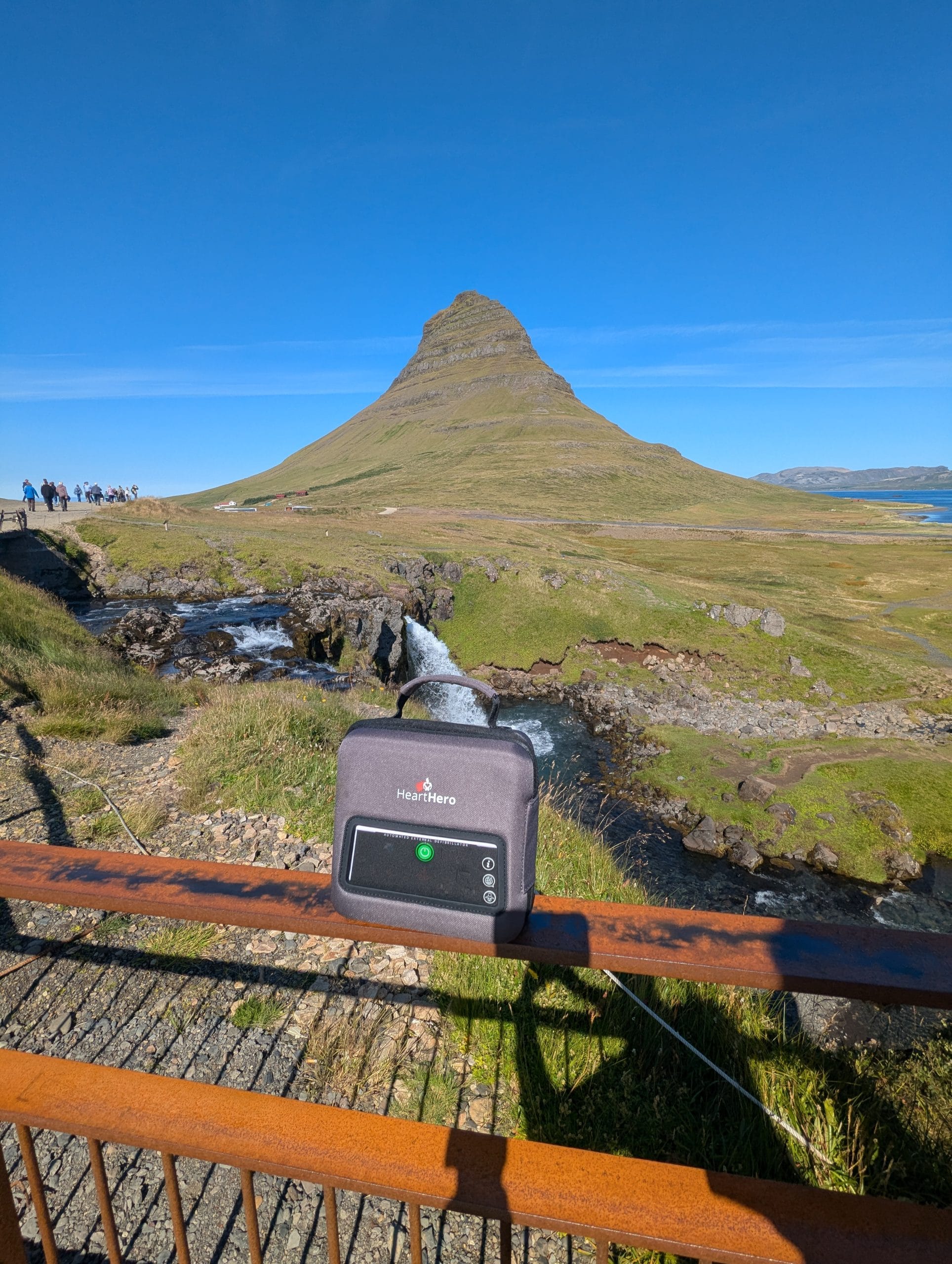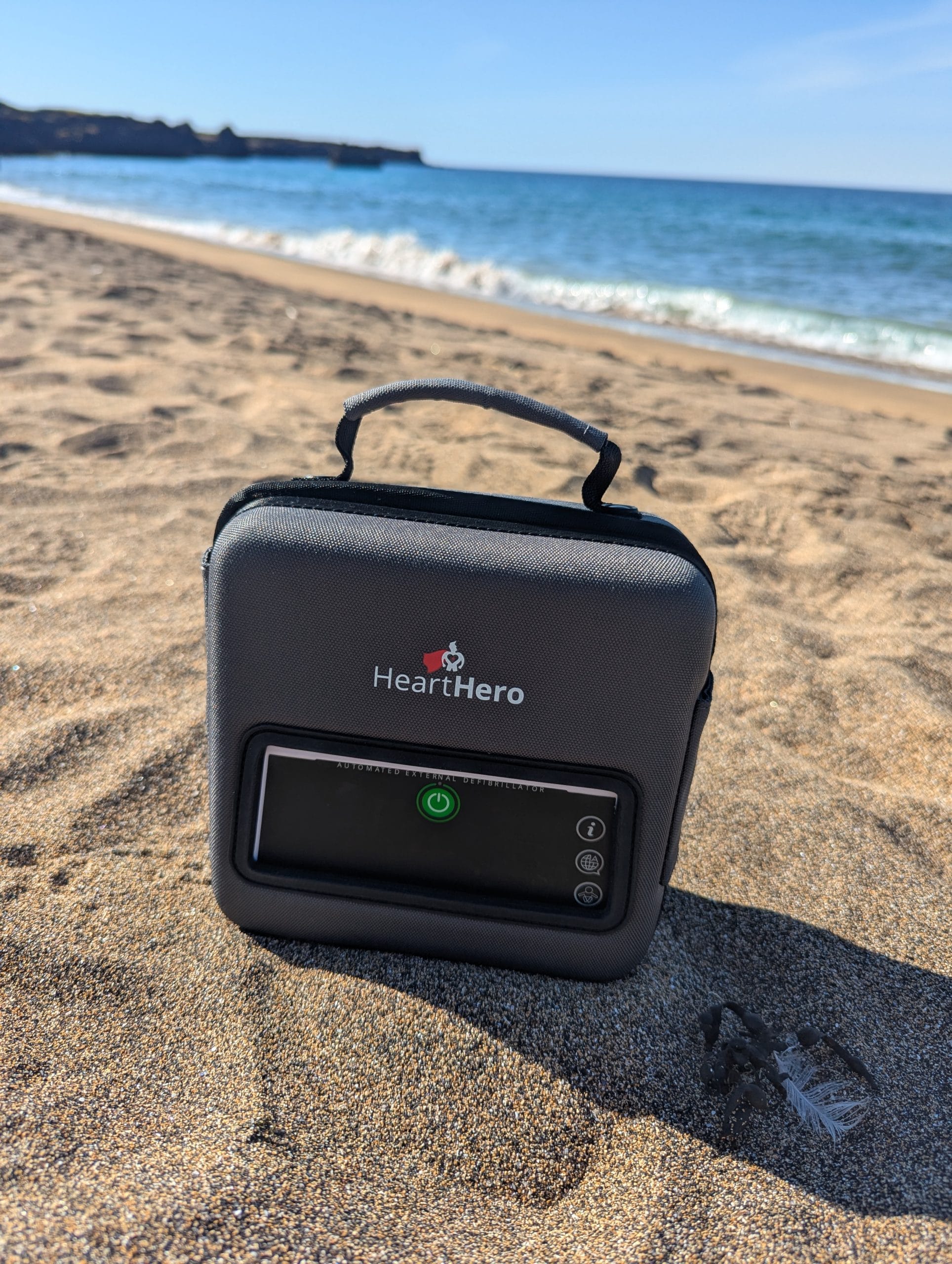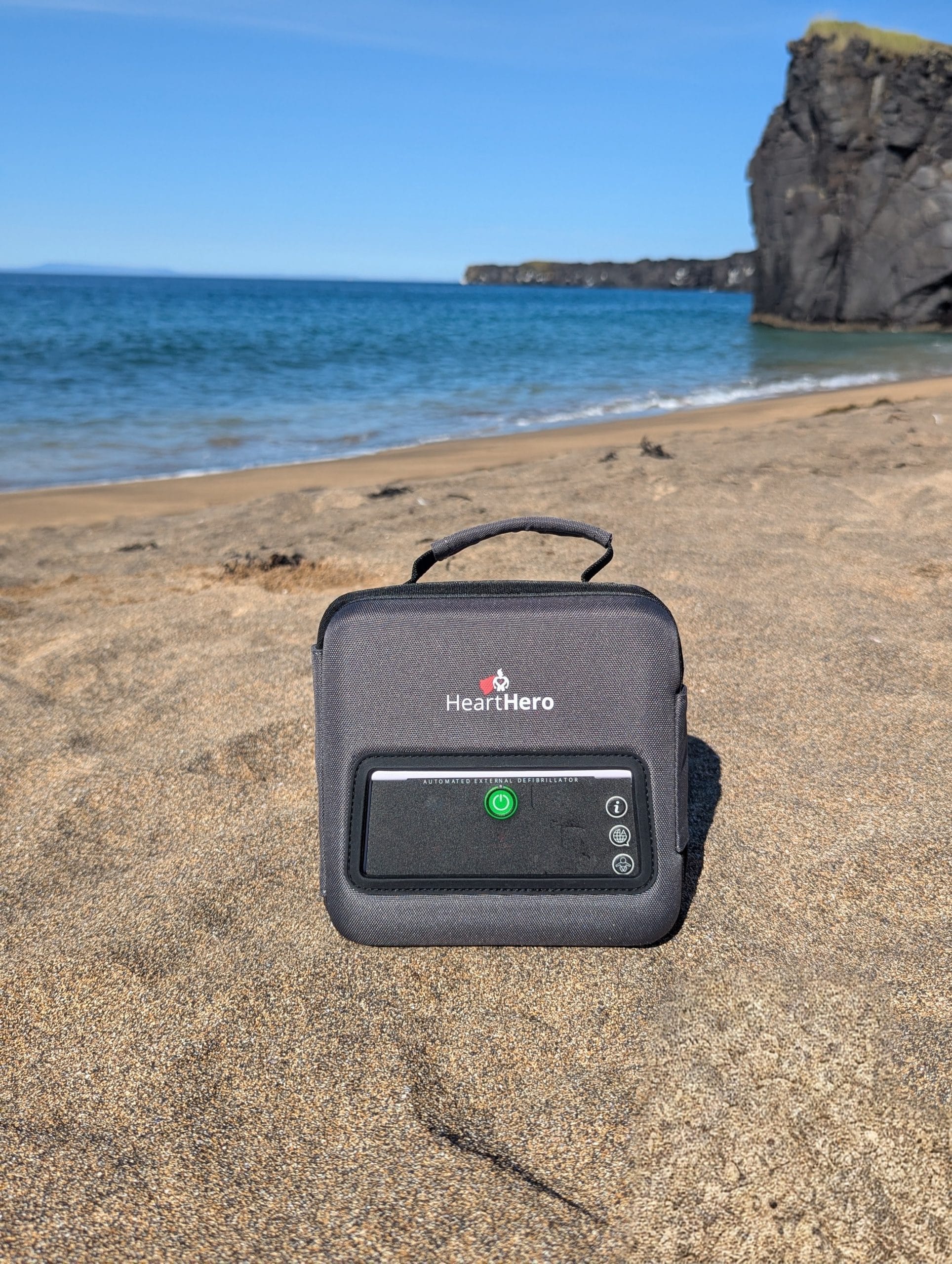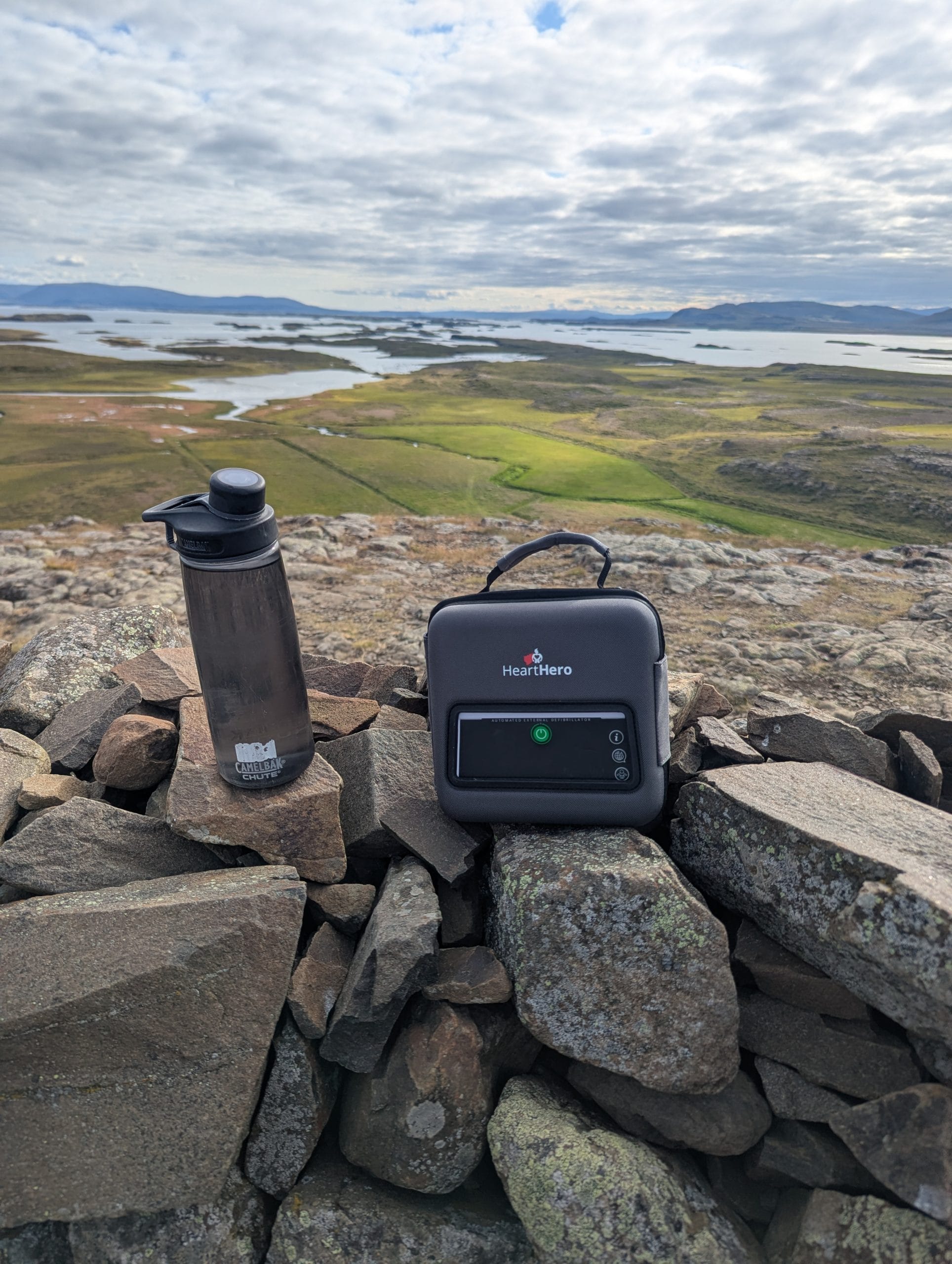
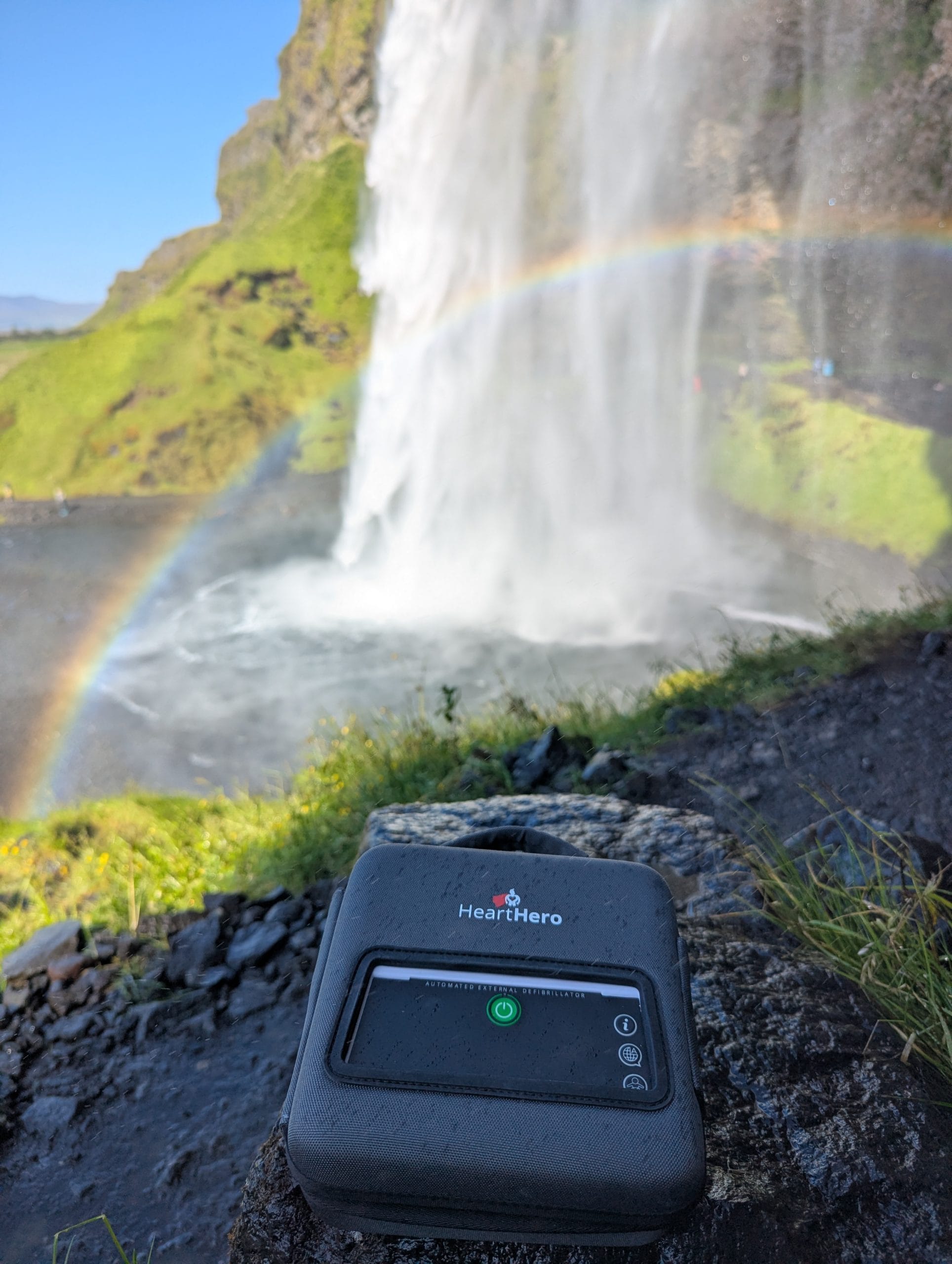
Most product testing happens in a lab. Ours happened on a glacier.
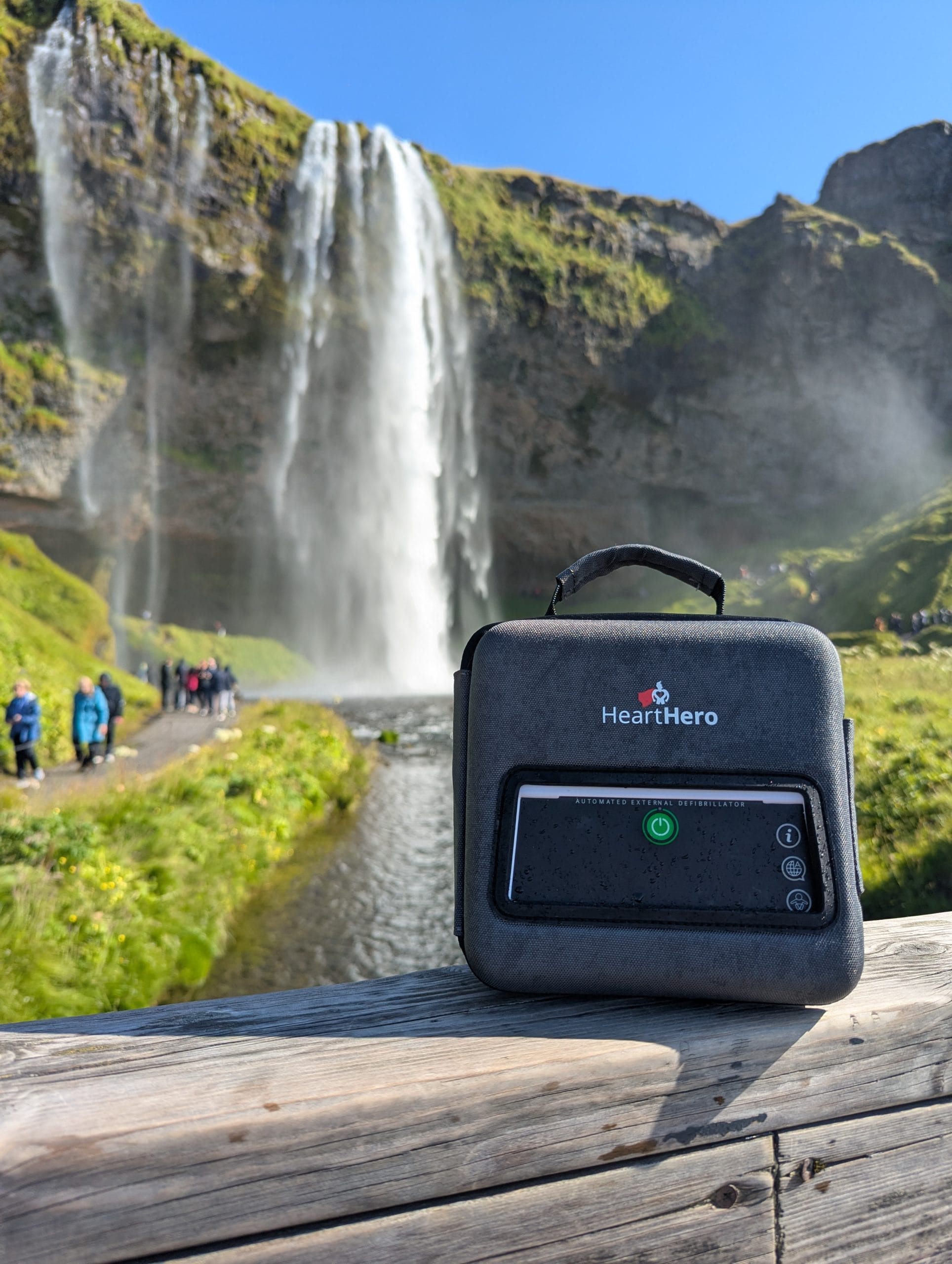
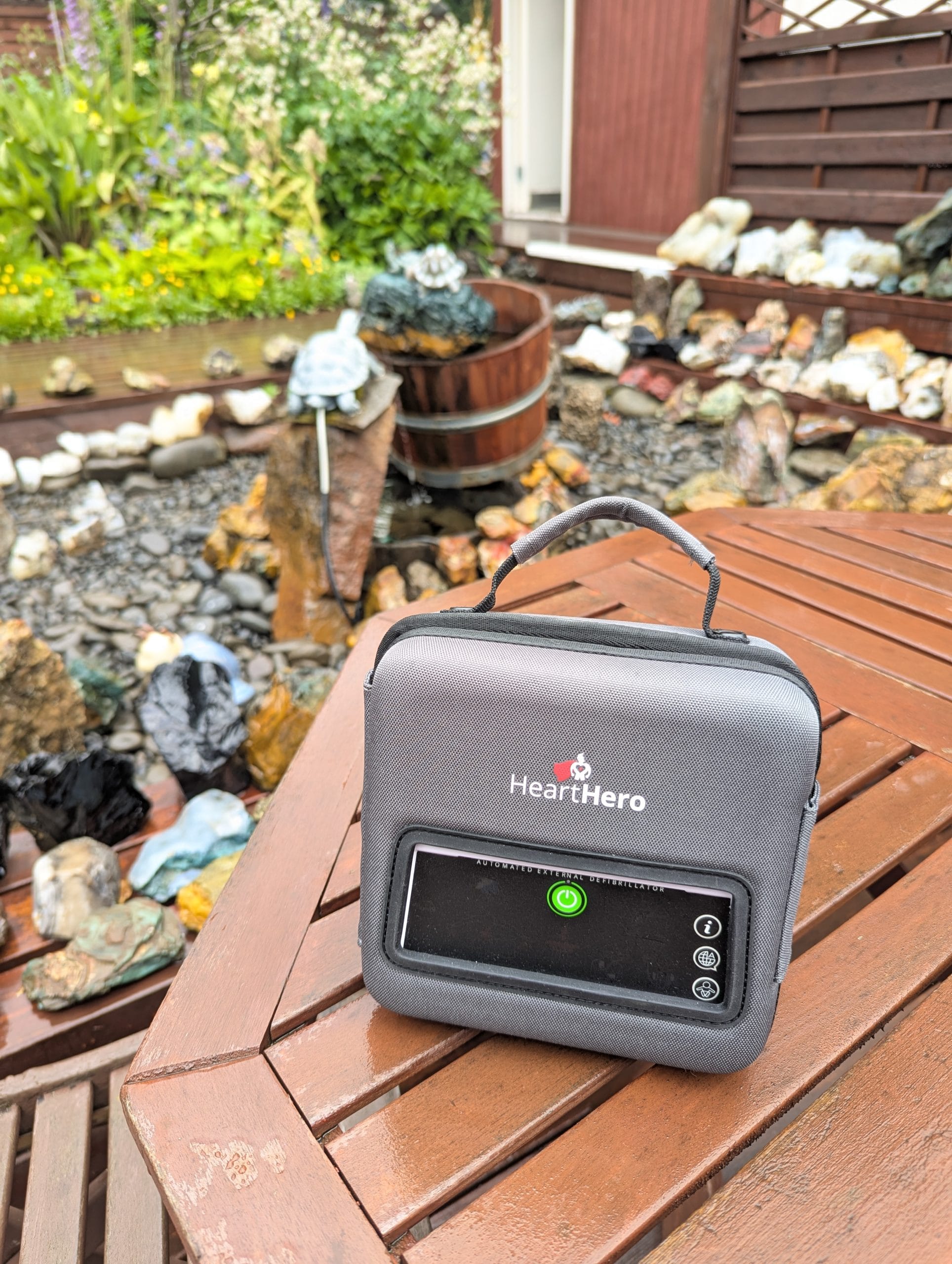
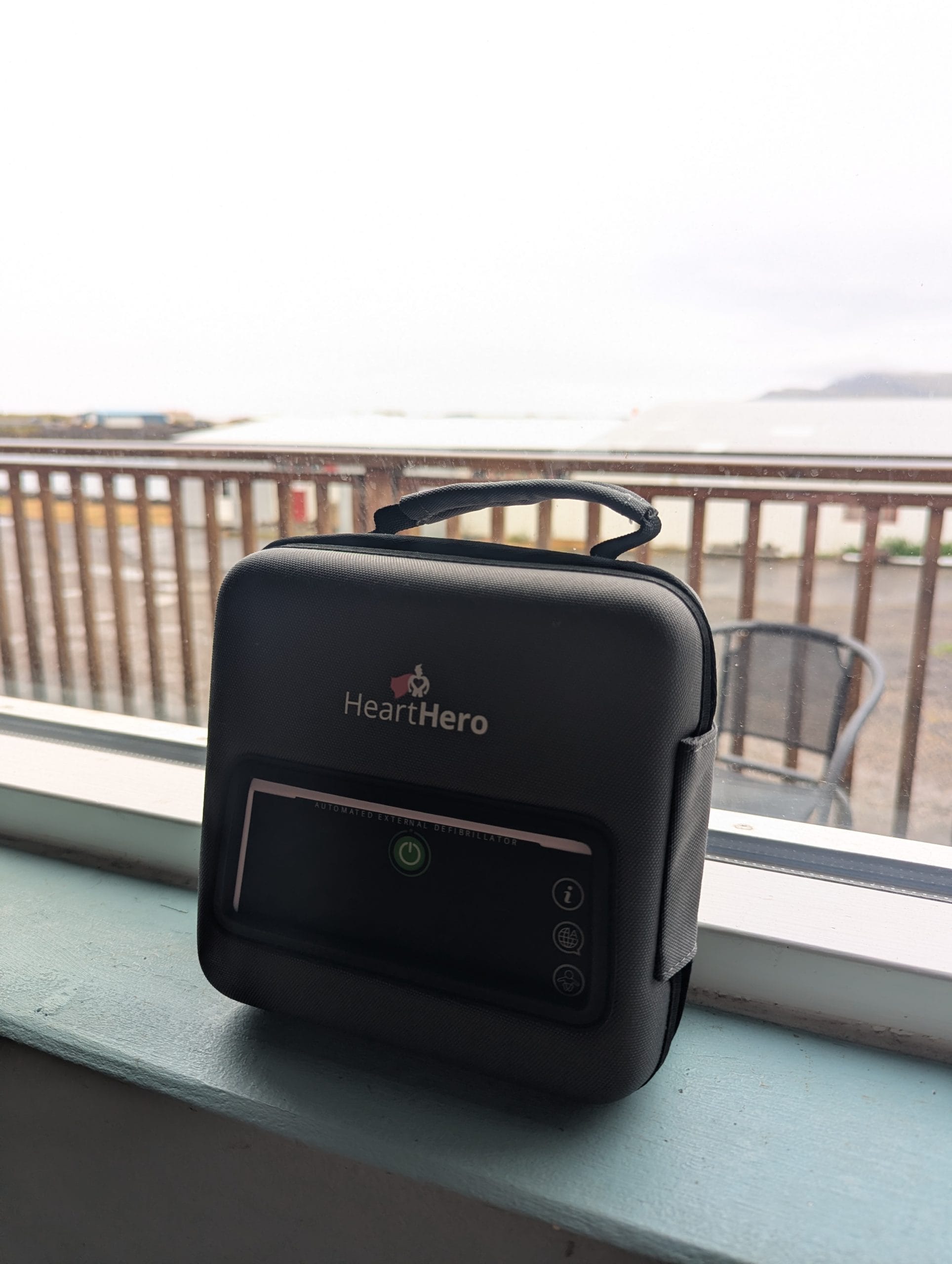
We wanted to know if the HeartHero Elliot could really live up to its IP66 rating and its claim to be one of the lightest, most portable AEDs on the market – not on a spec sheet, but somewhere that would actually punish it.
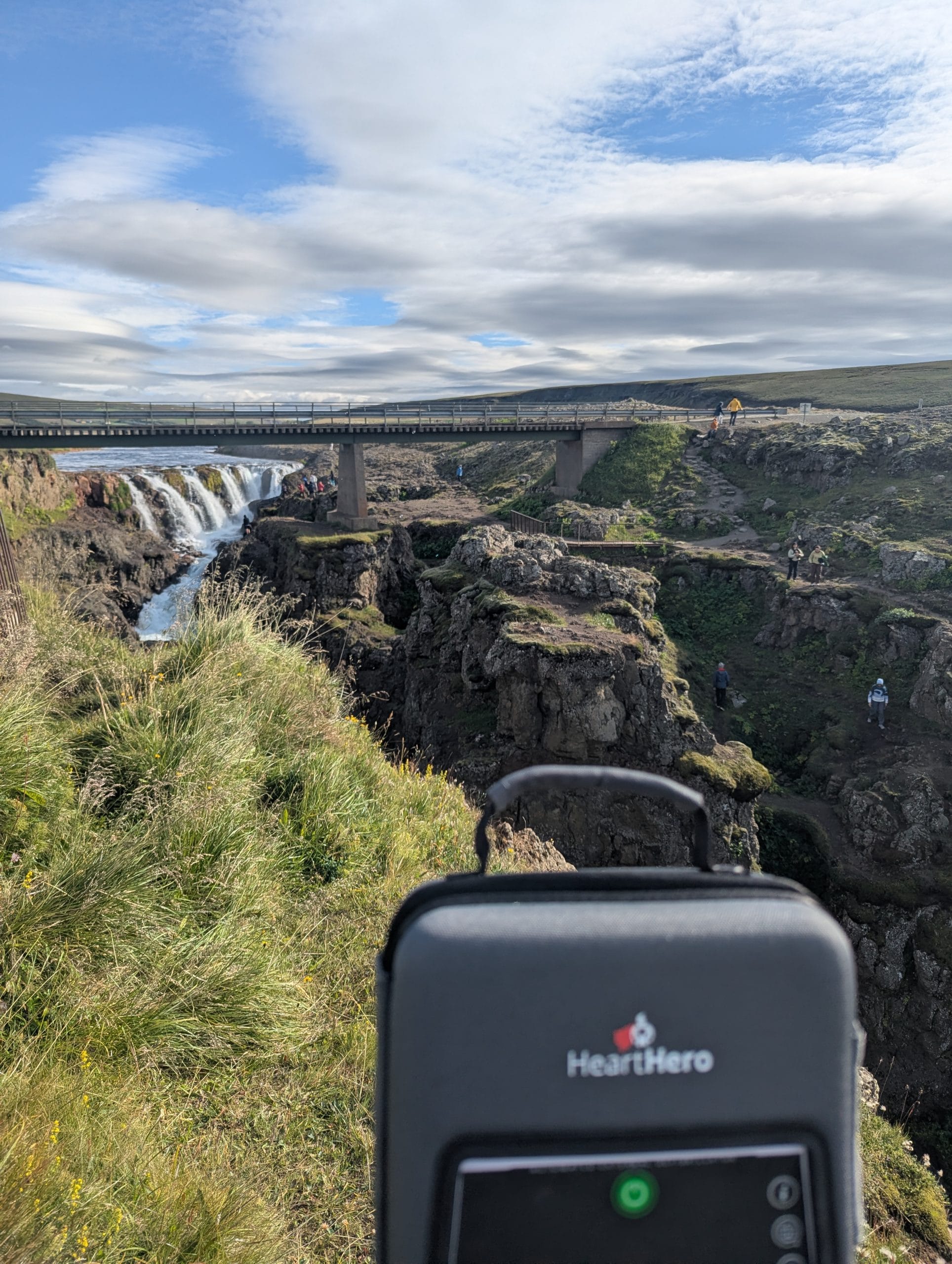
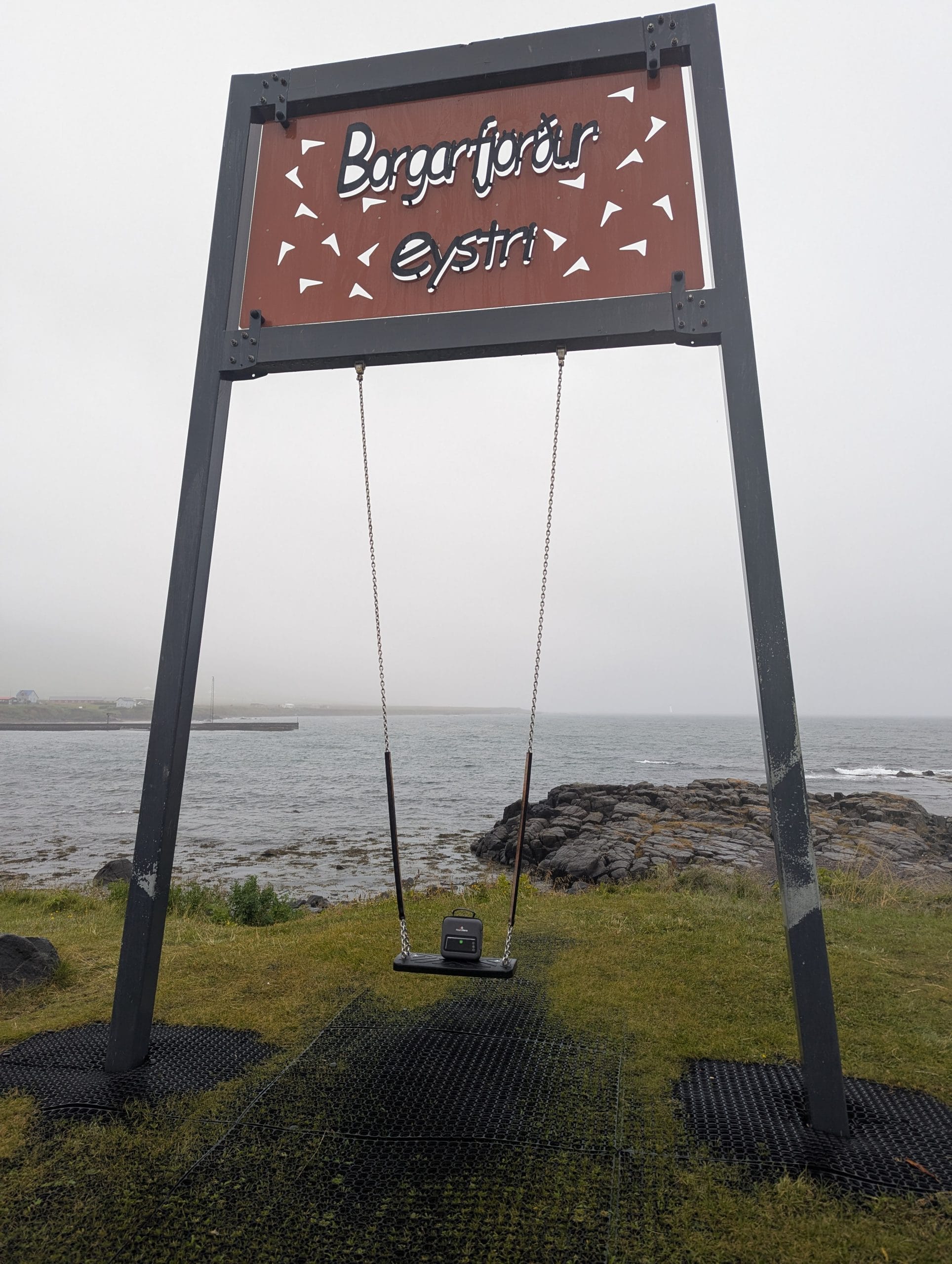
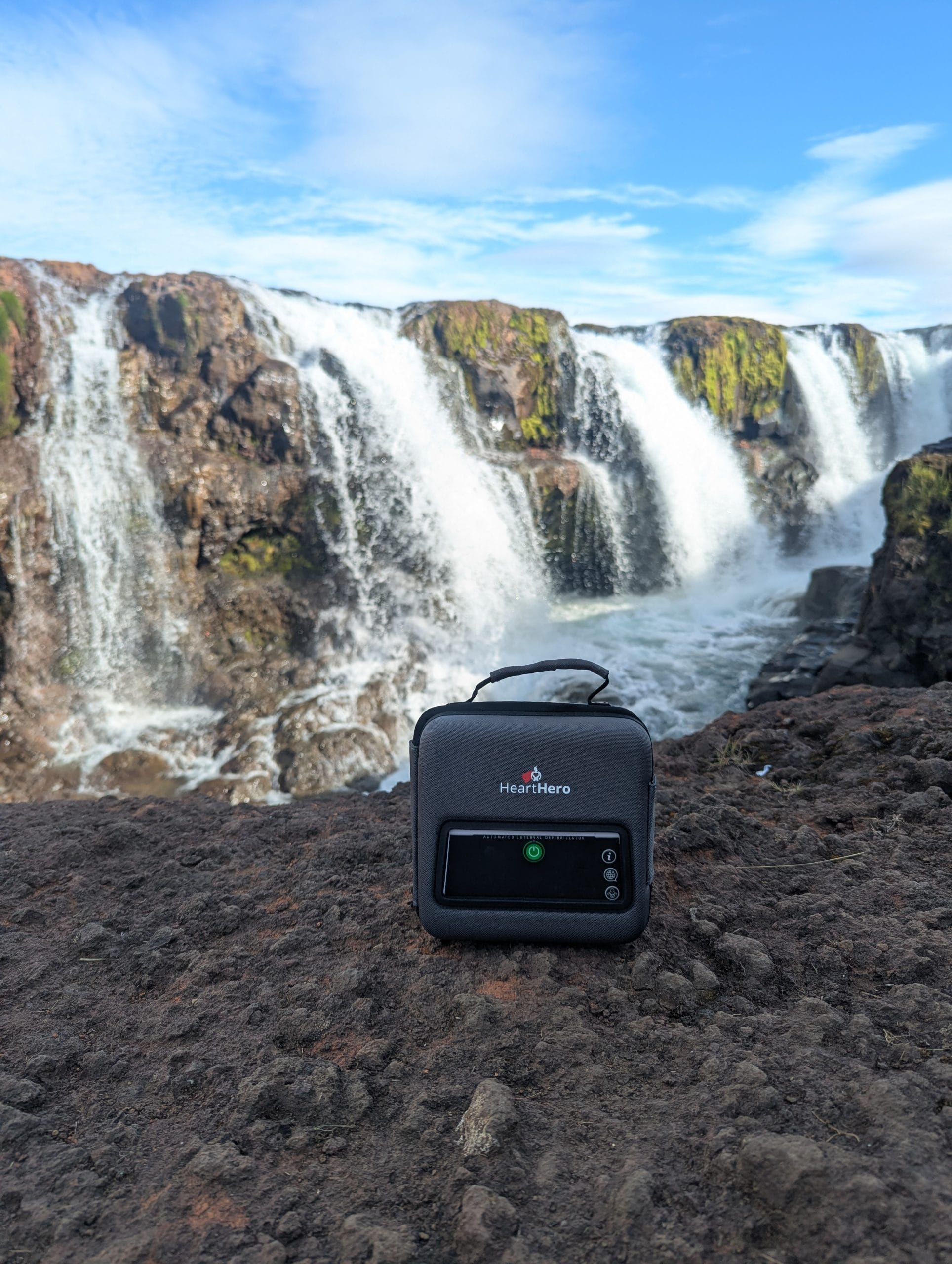
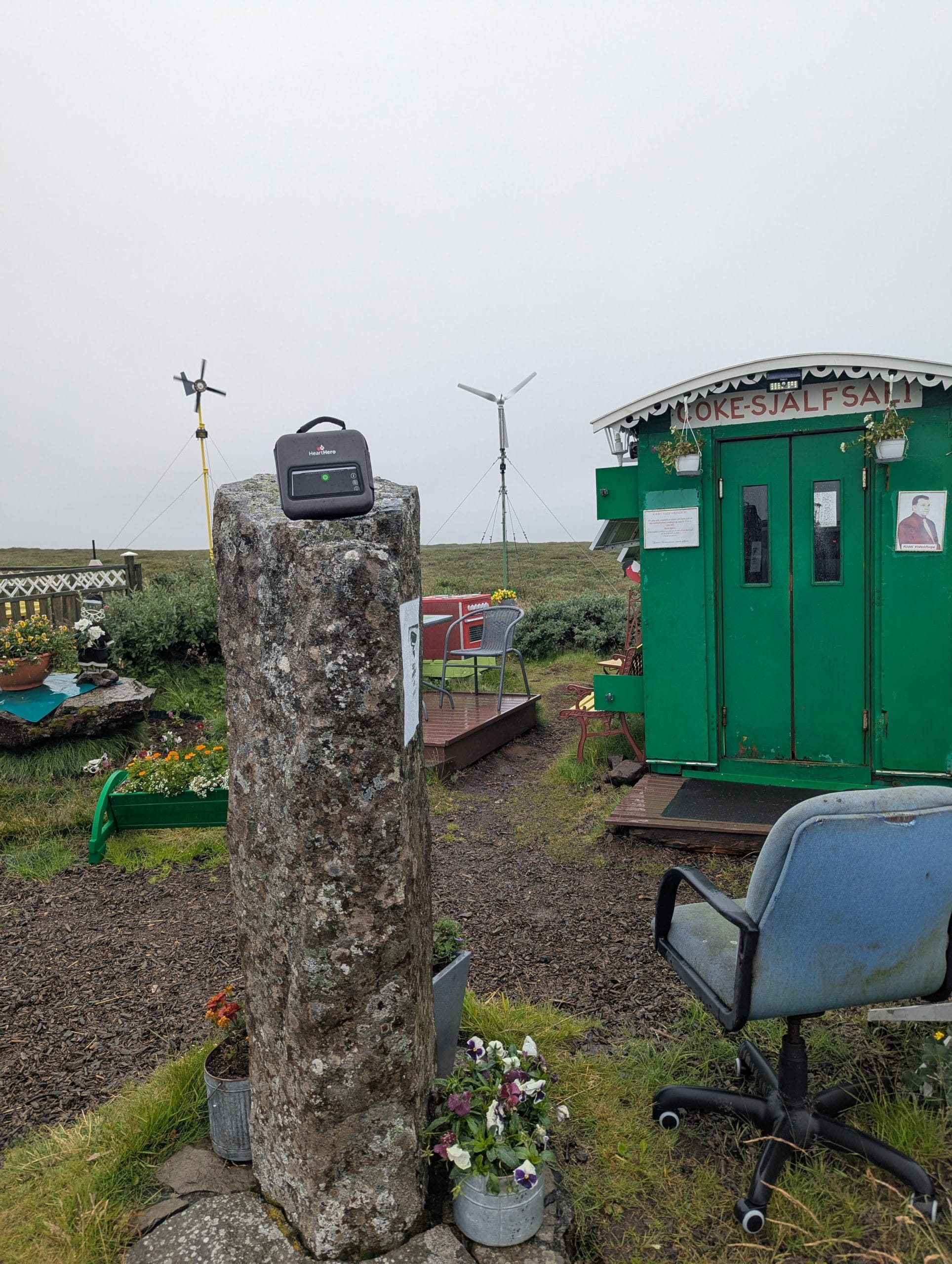
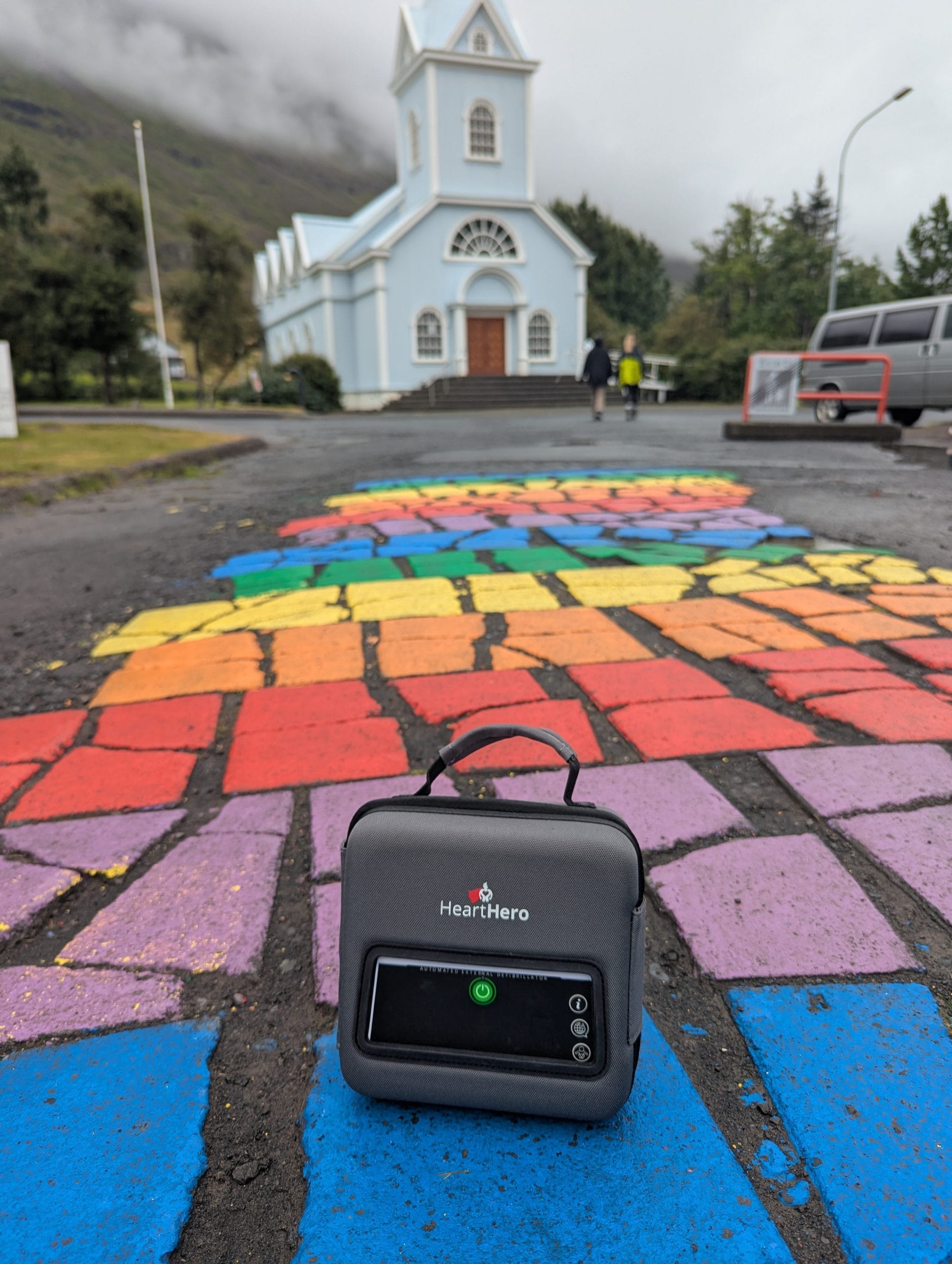
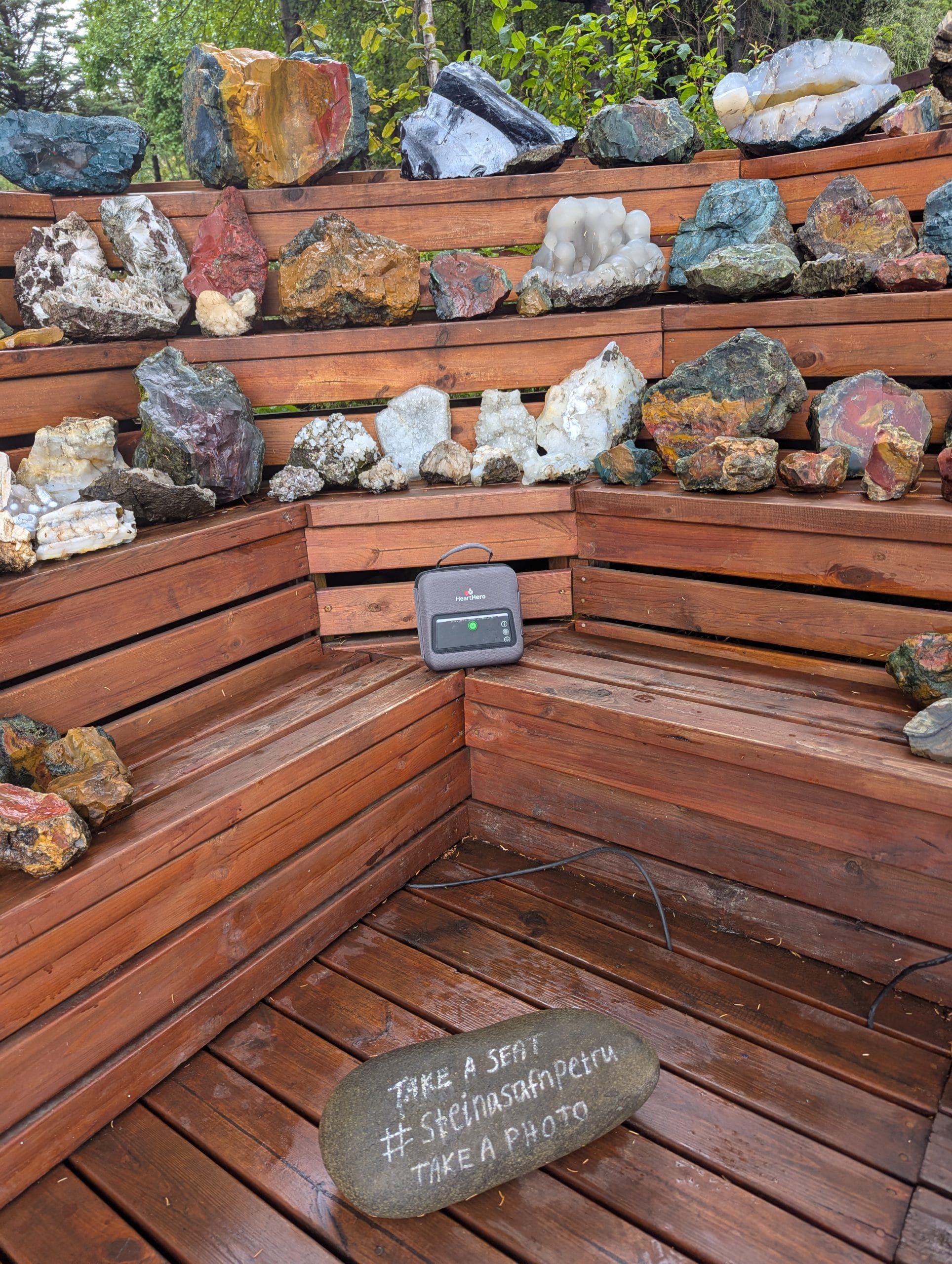
So, we packed it in a bag alongside the usual holiday kit and took it to Iceland: a country that specialises in glaciers, lava fields, ice caves, torrential rain, and roughly every weather condition a piece of emergency equipment might one day have to survive.
This is the story of that trip – and what it tells you about the defib that made it through.
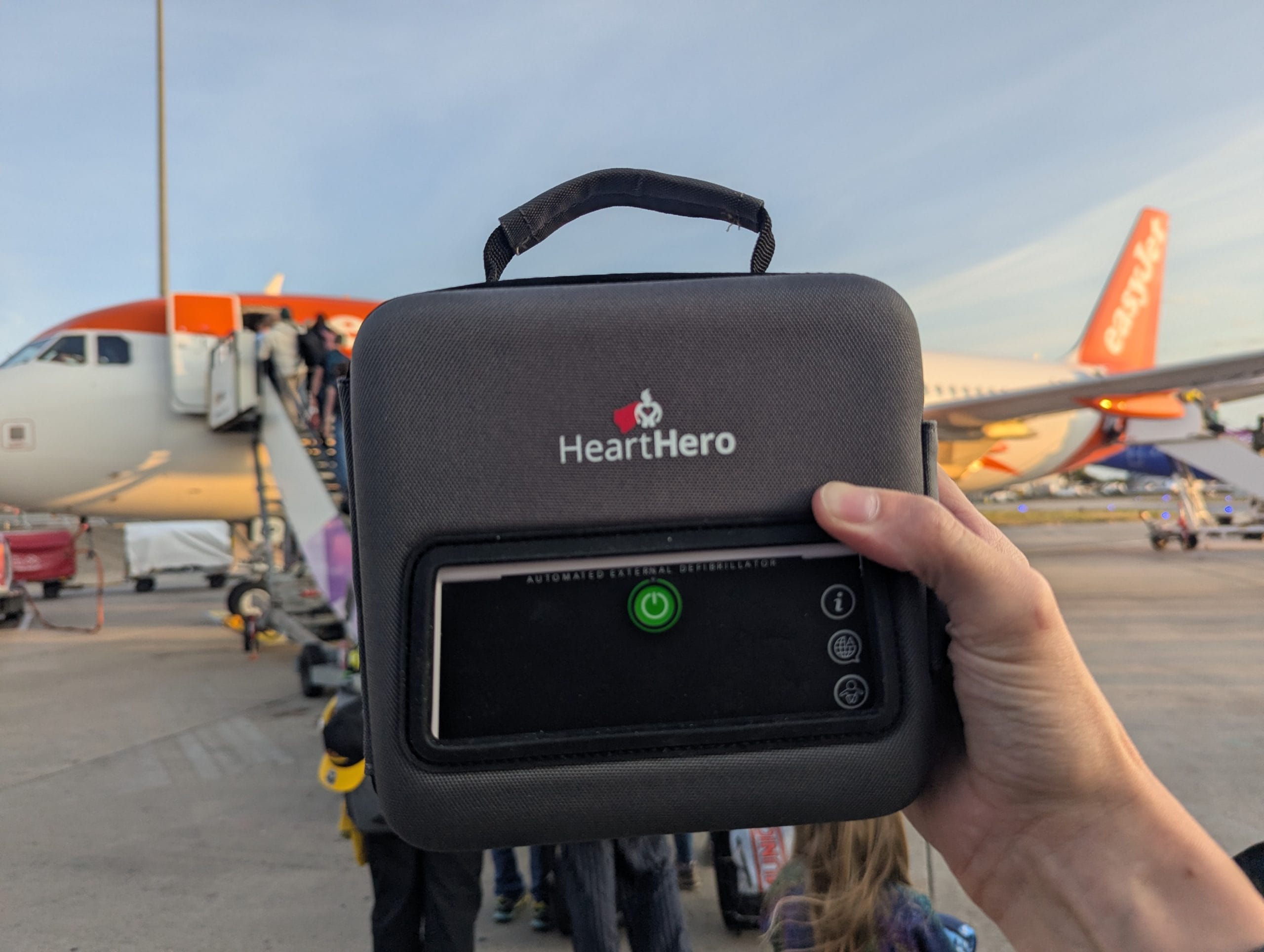
Packed Light From the Start
At just 671g, the Elliot weighs less than a third of some of the more established AEDs on the market. That mattered more than expected once we were taking a small rucksack packed with the essentials for a family, waterproofs, snacks, water bottles and the HeartHero. We chose to keep it in the optional carry case for ease and additional protection from everything else in the bag. This also meant we had a spare set of pads and spare batteries to hand – just in case it was needed.
Standard airport rules apply, so the defib was in the hand luggage, not the hold. Whilst we knew that there were no issues taking a defib on the plane, we were still slightly nervous passing through security, especially when the bag was chosen for a “random check” – the security guard was very interested in the defib, not for security reasons, just because he’d never seen such a small AED before and thought it was amazing we were taking it on holiday! Sadly, no photos from here due to airport rules.
If an AED is going to actually get used in daily life – kept in a car, a boat, a rucksack, wherever – it has to be something people are willing to carry without thinking about it. That’s the test that started before we’d even left home.
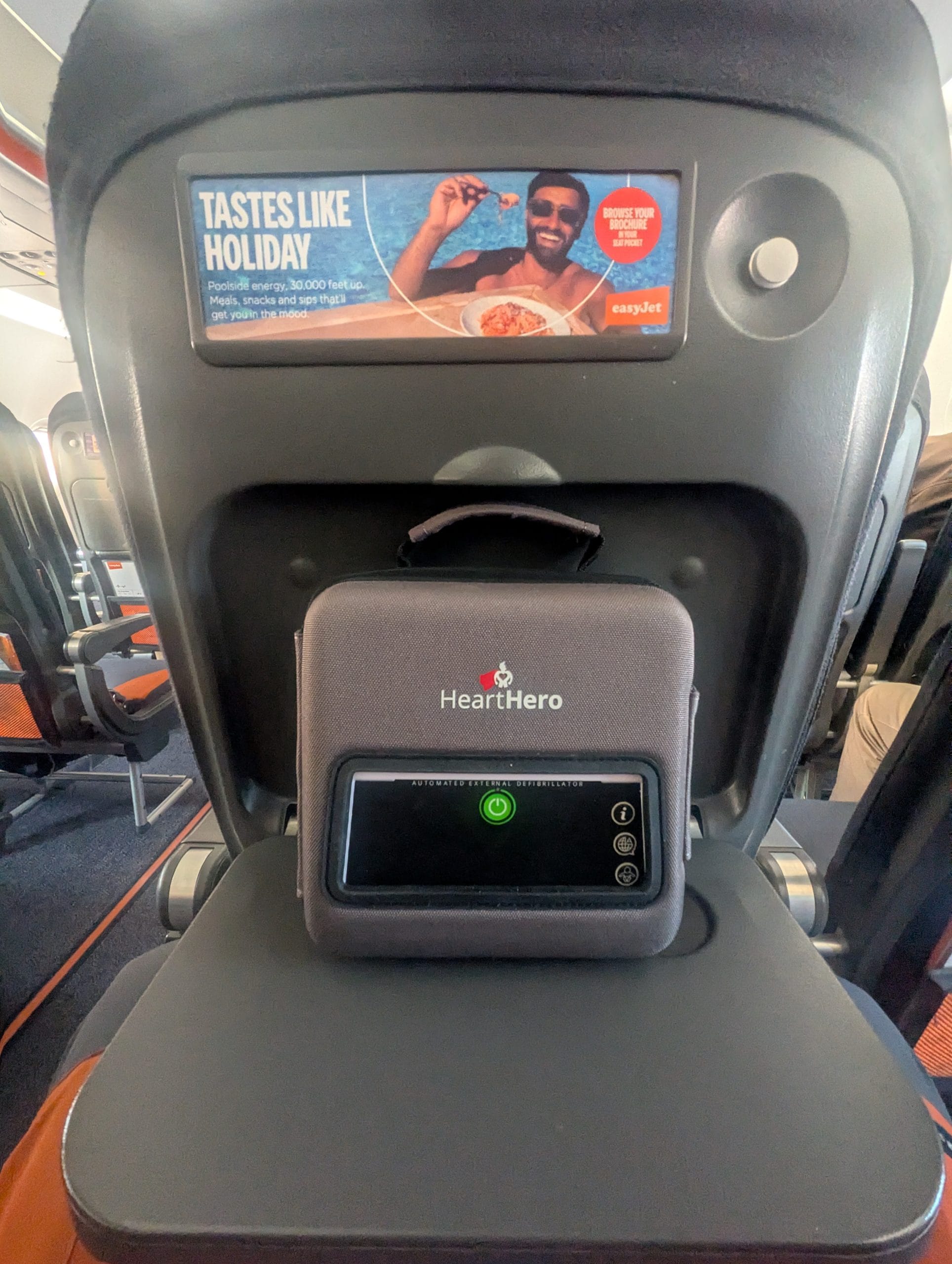
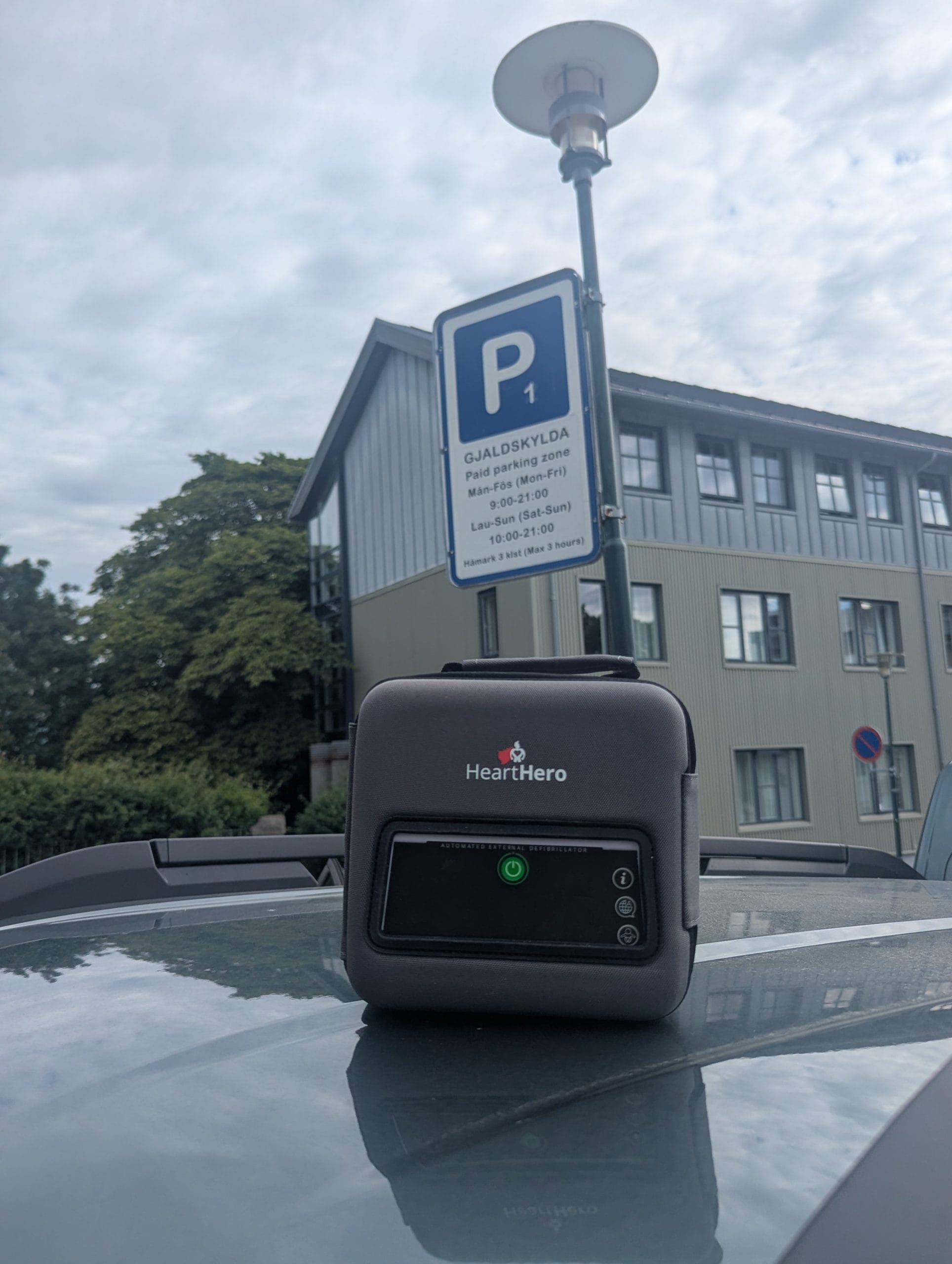
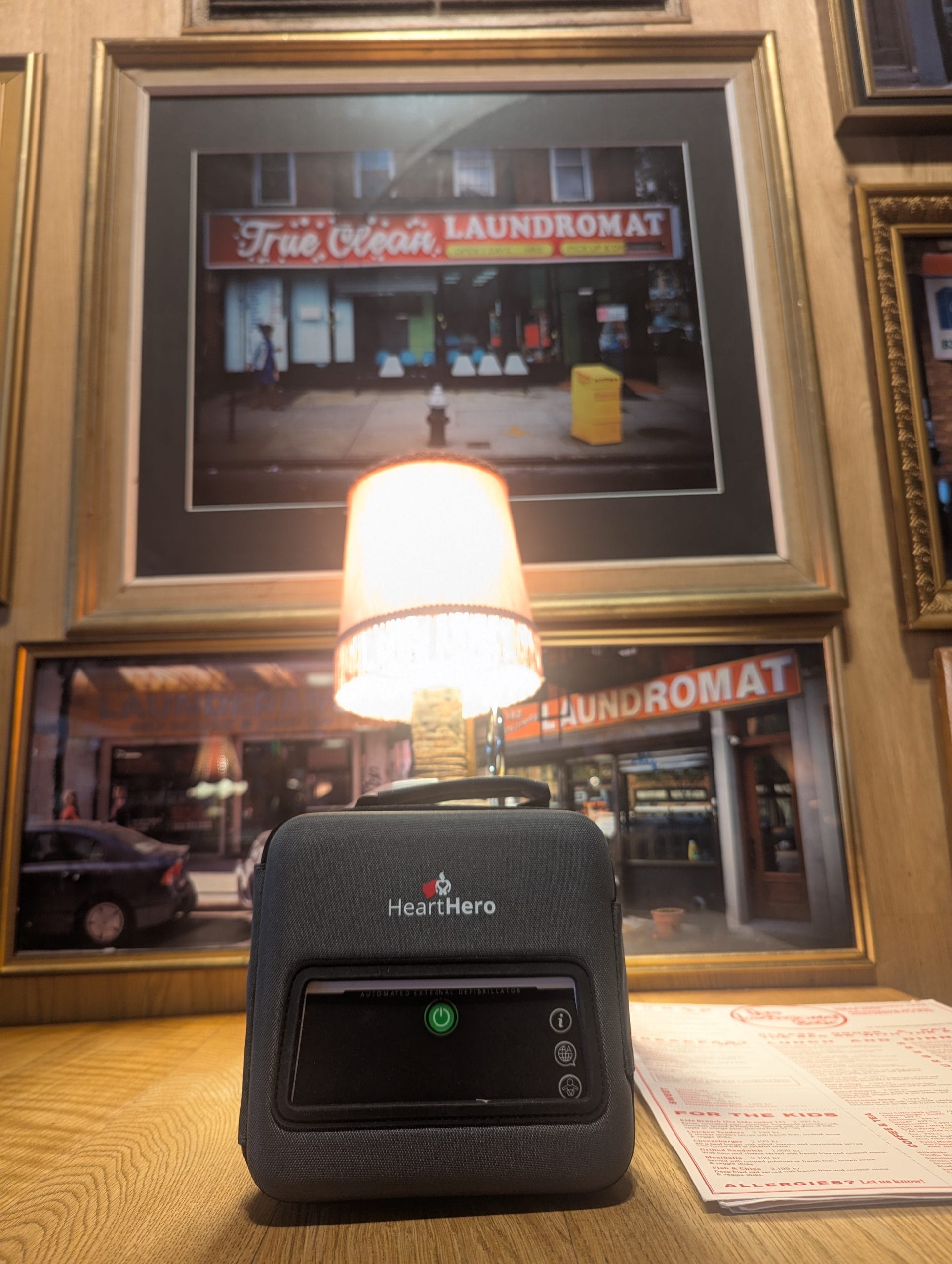
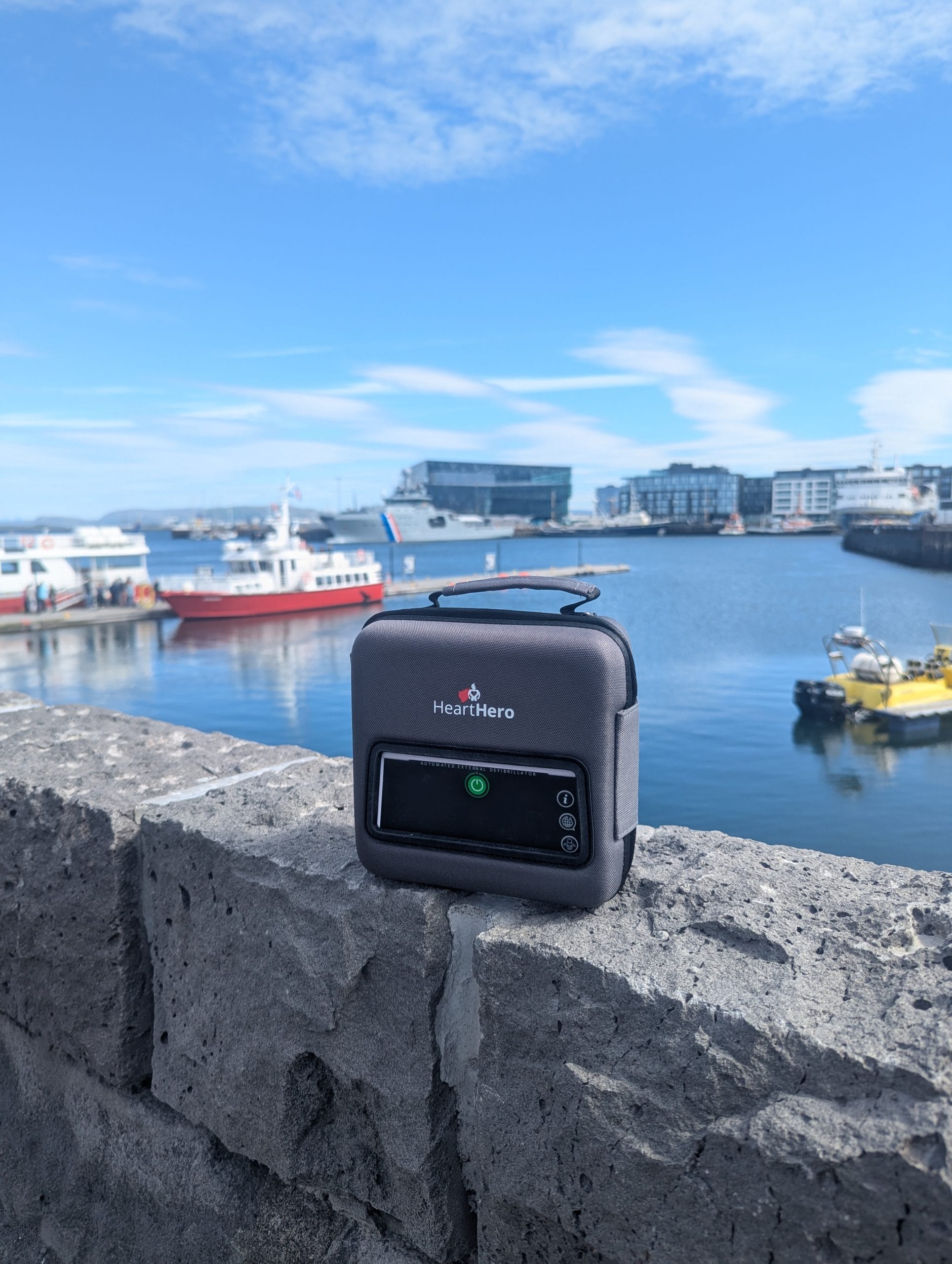
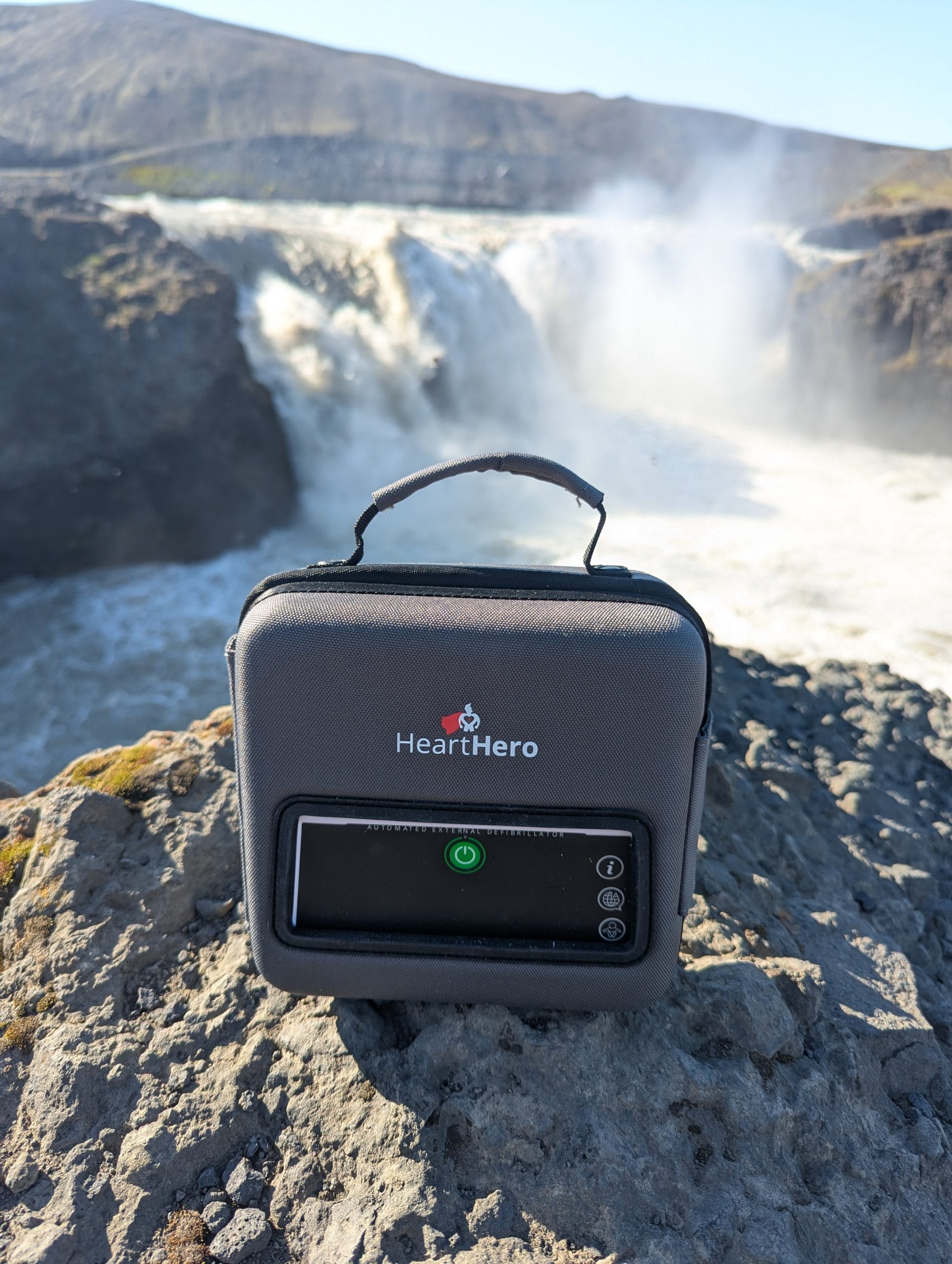
Glacier: Cold, Wet, and Still Ready
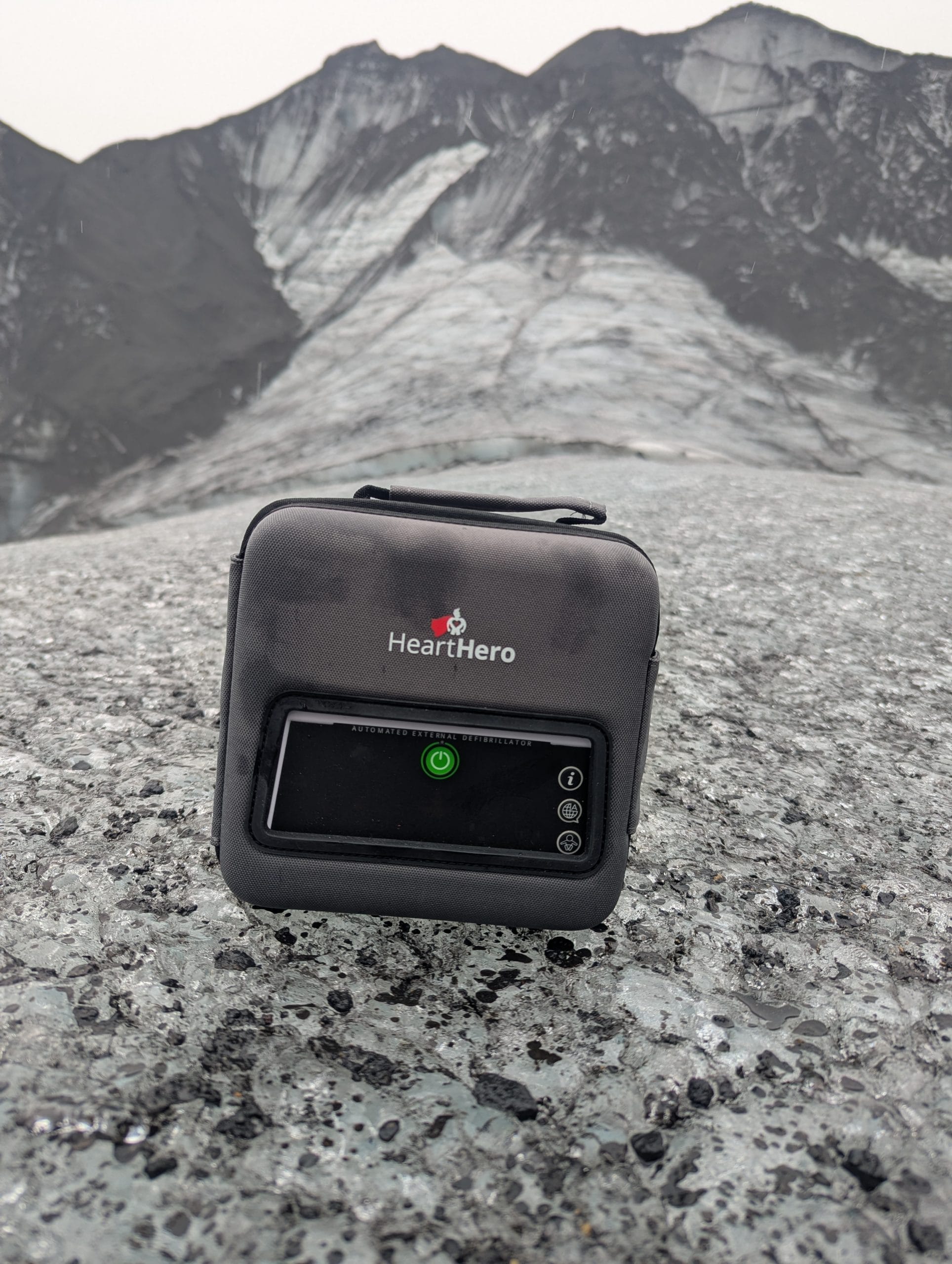
First stop was a glacier walk, crampons and all. Temperatures hovering close to freezing, meltwater everywhere, the Elliot started in the bottom of our rucksack but soon came out and was carried about the glacier for plenty of photos, even going into an ice cave. It raised lots of interesting questions from other tourists, but otherwise, continued to happily flash its little green “rescue ready” light the whole time.
The Elliot is rated to function reliably between -20°C and 50°C – a glacier in summer barely tests the bottom end of that range, but it’s a useful reminder of why that spec matters. Defibrillators don’t get to choose when they’re needed. If yours lives in a car boot through a UK winter, or a coastal clubhouse that never quite warms up, this is the number that actually matters to you.
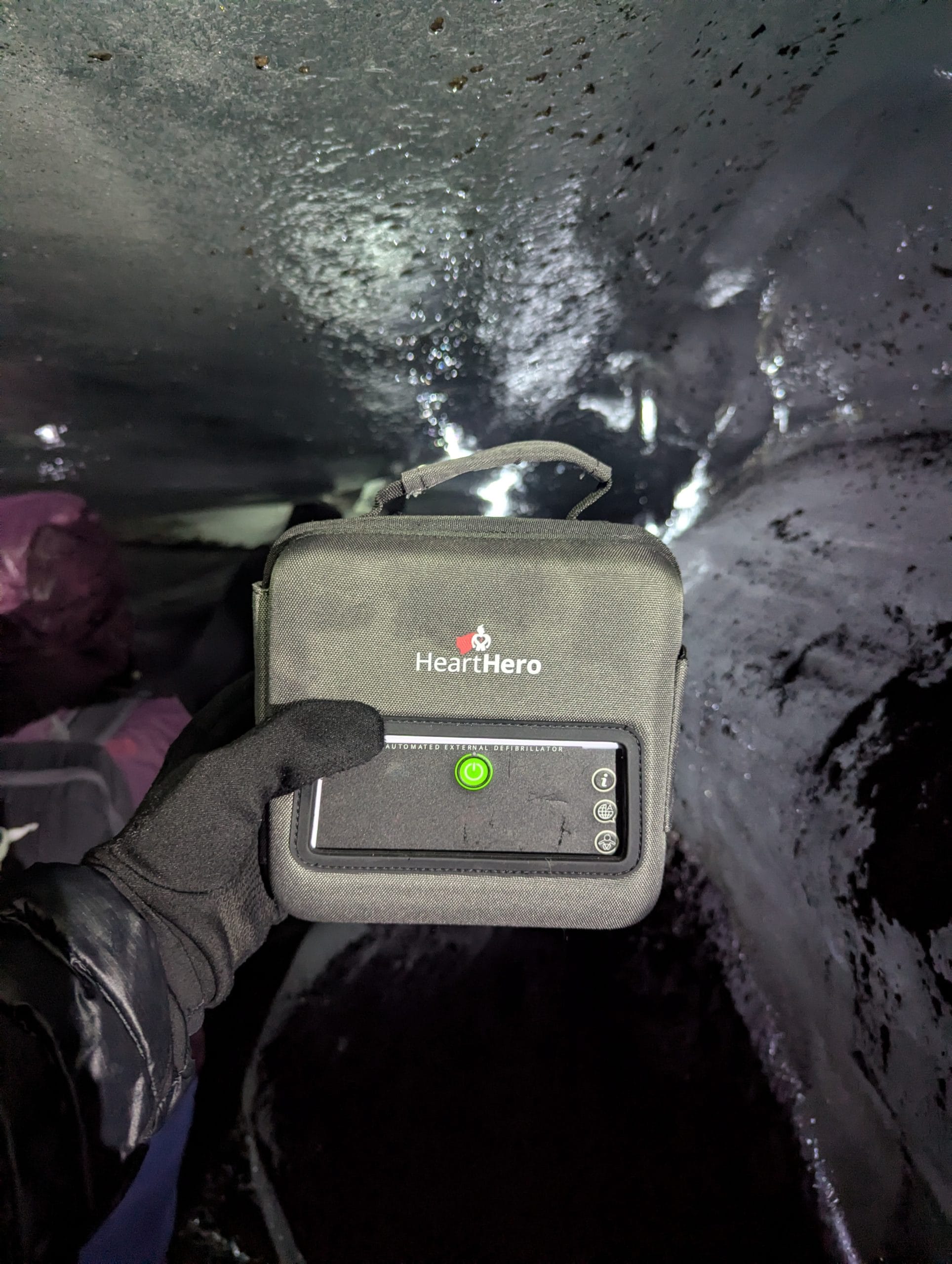
Ice Cave: Low Light, Tight Space
Ice caves are dim, blue, and cramped – not exactly a showroom. We wanted to see how the unit handled in low light and awkward positioning, since that’s a far more realistic emergency scenario than a well-lit demo room.
Pulling the handle powers the unit on and deploys the pads in one motion – no need to press the power button, no fumbling in the dark. In a space where head torches were doing most of the work, that simplicity stood out.
For reference I would not recommend trying this, having a defib announcing loudly to call 999 and start CPR in a touristy ice cave did draw a fair bit of attention!
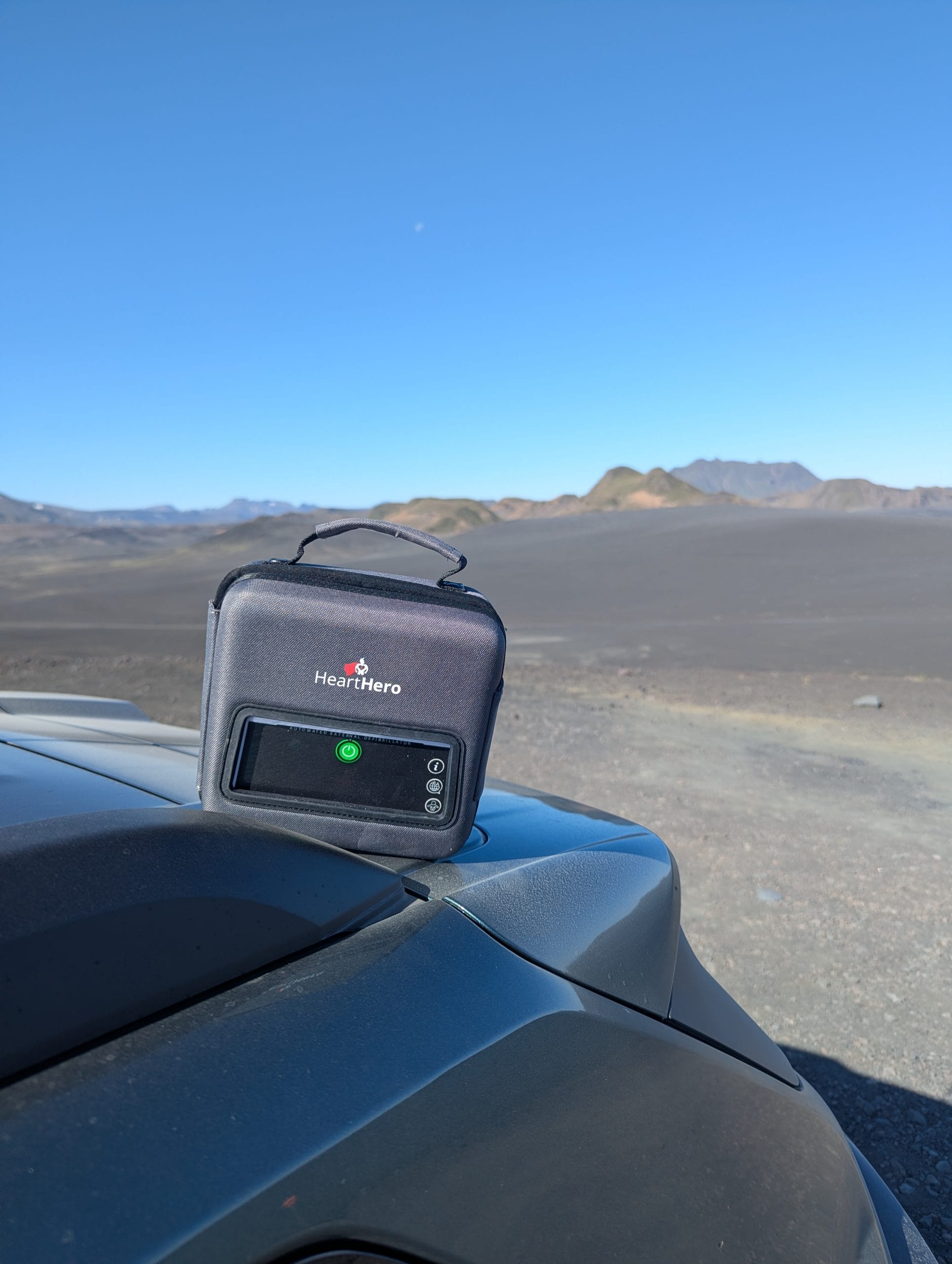
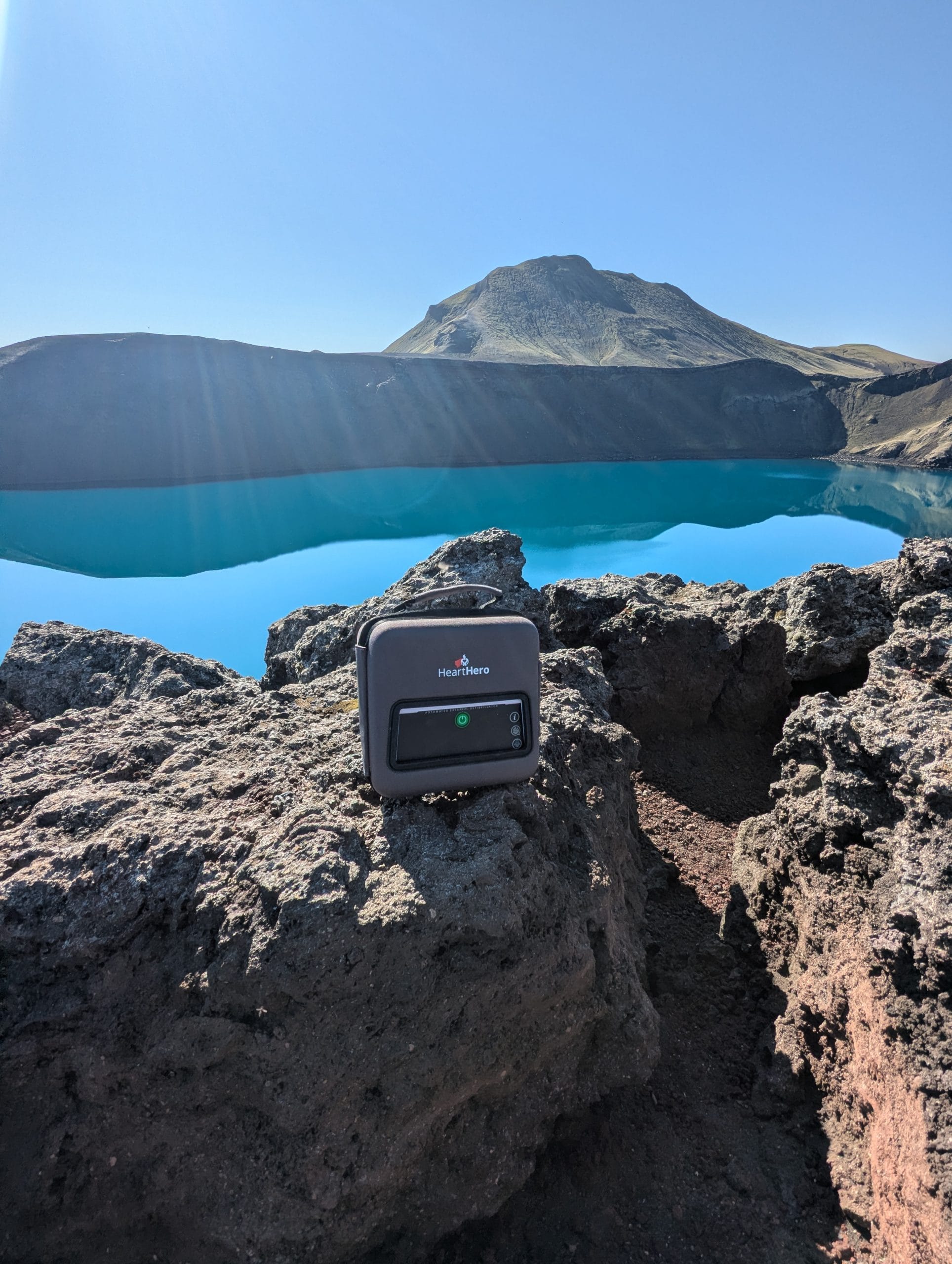
Lava Field: Rough Ground, No Padding
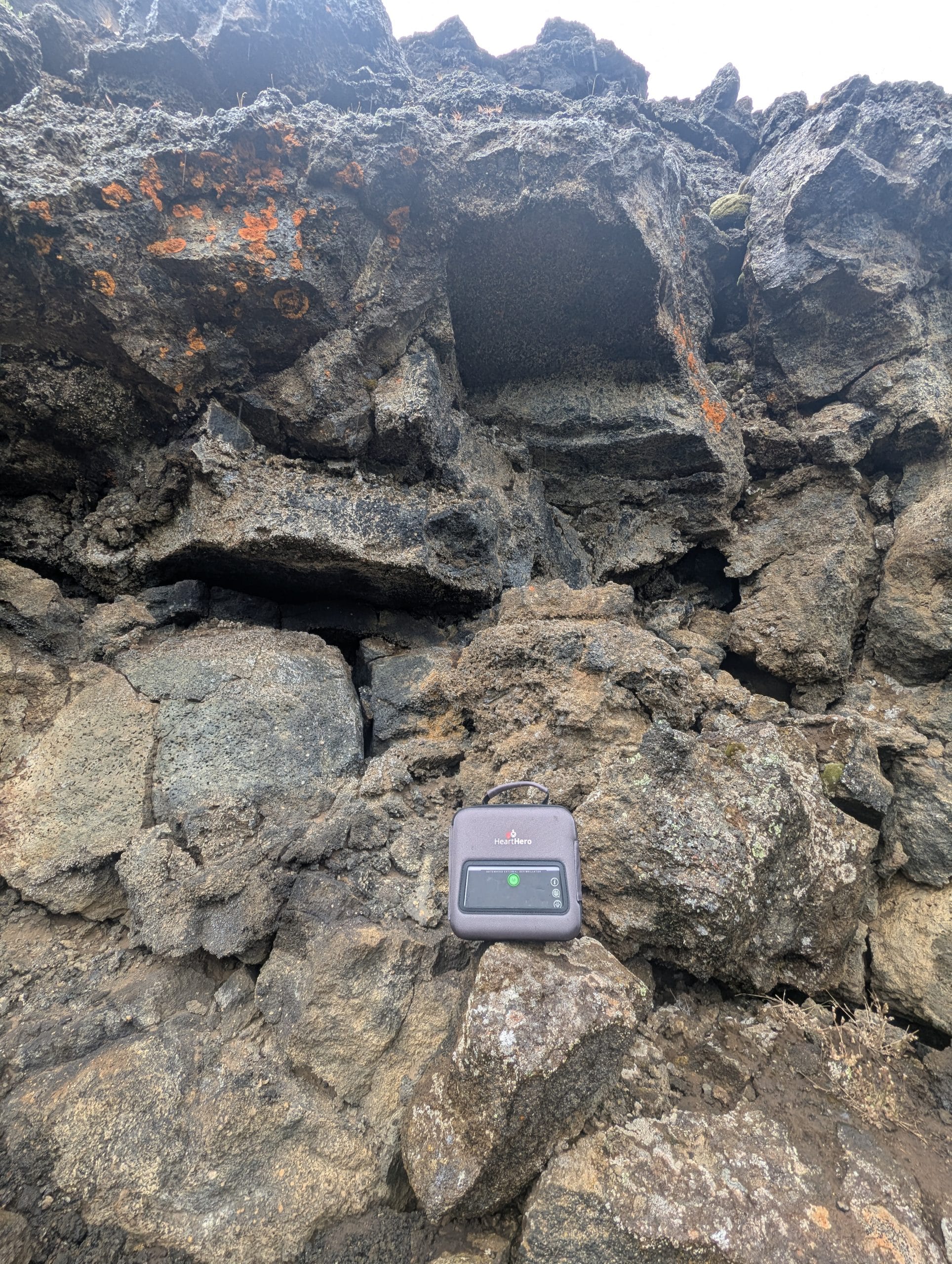
Iceland’s lava fields are jagged, uneven, and entirely unforgiving if you drop something – or yourself. We carried the Elliot across a stretch of it to see how a lightweight chassis holds up when there’s no soft ground to catch it.
This is really a portability story more than a durability one: a defib you’re not afraid to carry across difficult terrain is a defib that’s more likely to actually reach someone in time. That’s the whole point of shaving weight off the unit in the first place.
What This Actually Tells You
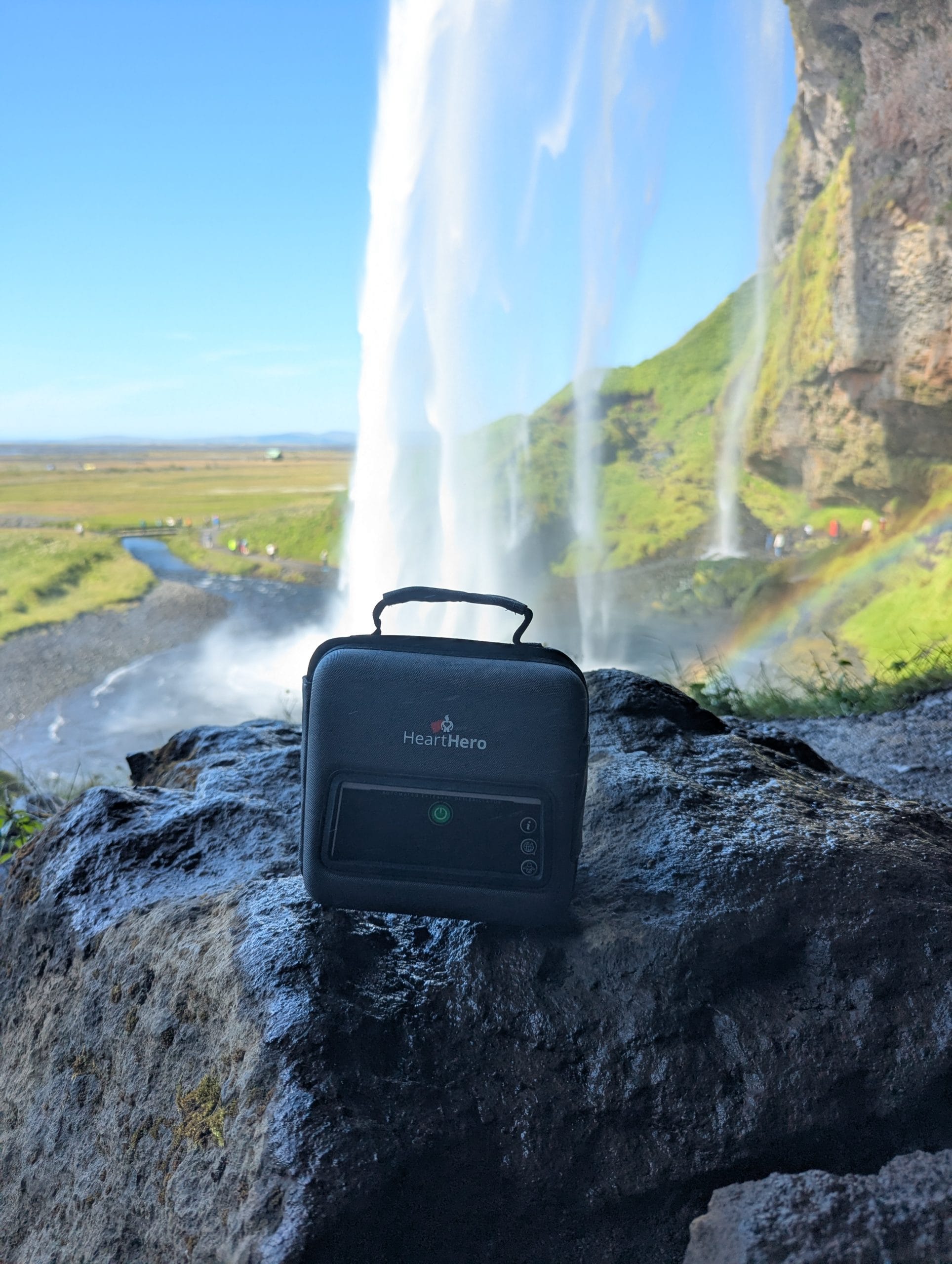
None of this replaces the manufacturer’s testing or certification – IP66 and the -20°C to 50°C operating range are independently rated, not something we’re claiming to have proven ourselves in two weeks. What this trip does show is what those numbers feel like in practice: a defib that goes in a bag without a second thought, survives being properly rained on, and comes out the other side ready to go, with its 6-year warranty backing all of it up.
That’s really what “rescue ready” should mean – not just in a cabinet in ideal conditions, but wherever life actually happens. We certainly proved you can take a defib with you everywhere you go, perhaps it doesn’t need to feature in your holiday snaps, but, it can be put in your bag, forgotten about and be available for any emergency that may occur.
Want to see the Elliot for yourself? View the HeartHero Elliot AED page here or get in touch with us by phone or email and the Turtle Medical team can help you choose the right defib for your home, workplace, or vehicle.