
Perhaps it’s not just your child/grandchild who is starting somewhere new this September.
With a new job or community/voluntary role comes new responsibilities, and one of those might well be looking after the office/school/library/sports centre/shop defibrillator.
With more than 100,000 public defibs currently registered on The Circuit in the UK, that’s a lot of individuals who may or may not have been taught how to look after these critical, potentially life-saving devices.
So, for those of you who have recently inherited the title ‘Defib Guardian’, or existing guardians looking for a quick refresher, here’s the Turtle Medical rough guide to looking after a defib.
Step 1 – Get to know your cabinet
These days, most public defibs are located in cabinets, but these cabinets can vary enormously.
Here at Turtle, we offer a wide range of defib cabinets, all IP66 rated, available in a variety of sizes and colours, with different features to suit different locations.
When looking after a defib, it makes sense to look after its cabinet too, so here’s a checklist of what to look for:
Is your cabinet heated, solar/wind powered or insulated?
Each of these cabinets needs slightly different care. A heated cabinet connected to the mains needs its power supply checking, while solar/wind-powered and insulated cabinets have their own considerations.
Is your cabinet metal or plastic?
Metal cabinets without an IP66 rating, or those in exposed coastal locations, can be more susceptible to rust, while plastic cabinets can warp, fade and crack due to weather conditions, including UV rays.
Is your cabinet locked or unlocked?
If it’s locked, who knows the key code?
Is the code displayed? Some remote or rural locations choose to display the code where there is poor phone signal or a low risk of theft. More importantly, is the code known to the ambulance service?
You can check whether your defib is registered and known to the emergency services by visiting Defib Finder, which takes its information directly from the national database of defibs known as The Circuit.
Please note that your defib/cabinet may have been de-registered if the pads or battery are out of date, or if the defib was previously deployed by the ambulance service and not put back on the online system. Putting it back on the system is one of the responsibilities of a Guardian.
Locked cabinets should be checked regularly, ensuring the key code is correct and that the keys operate smoothly. Spray the key code door lock twice yearly (Autumn/Spring) with GT85 – never WD40.
Is the wording on the cabinet accurate and legible?
Modern cabinet labelling often includes a what3words location. Others have a contact name/number or regular street address.
Some cabinets also contain a bleed kit as well as a defib, in which case they either need a combined vinyl print or a separate ‘bleed kit inside’ label.
Order your replacement Turtle cabinet label here.
Step 2 – Get to know your defib
First things first. Stop saying (or attempting to say) defibrillator – it’s such a hard word to say/type and you’ll be using it a lot as a Guardian.
Now you know all about your cabinet and how to get into it, you can take a good look at your defib.
These also come in different sizes and colours, with different features and operating procedures. The good news is that they are designed to be simple to use by people with no medical training – remember, these are PUBLIC defibs.
You will need to know what make and model of defib you have, just as you would for a car, dishwasher or washing machine, in order to buy the correct replacement parts.
Pads and batteries have expiry dates, but these vary between manufacturers and models. Always check the dates on your particular defib and follow the manufacturer’s instructions. Pads will also need replacing after a defib has been used.
Replacement costs vary considerably, so it’s worth knowing what you have before you need to order something in a hurry.
Popular brands of defib (and related models) include:
- Zoll (AED3, AED Plus)
- Physio Control (LifePak CR2)
- Heartsine (350P, 360P, 500P)
- Reanibex (R100)
- CU Medical (iPad SP1/SPR/NFK200
- Philips (HeartStart HS1/FRX)
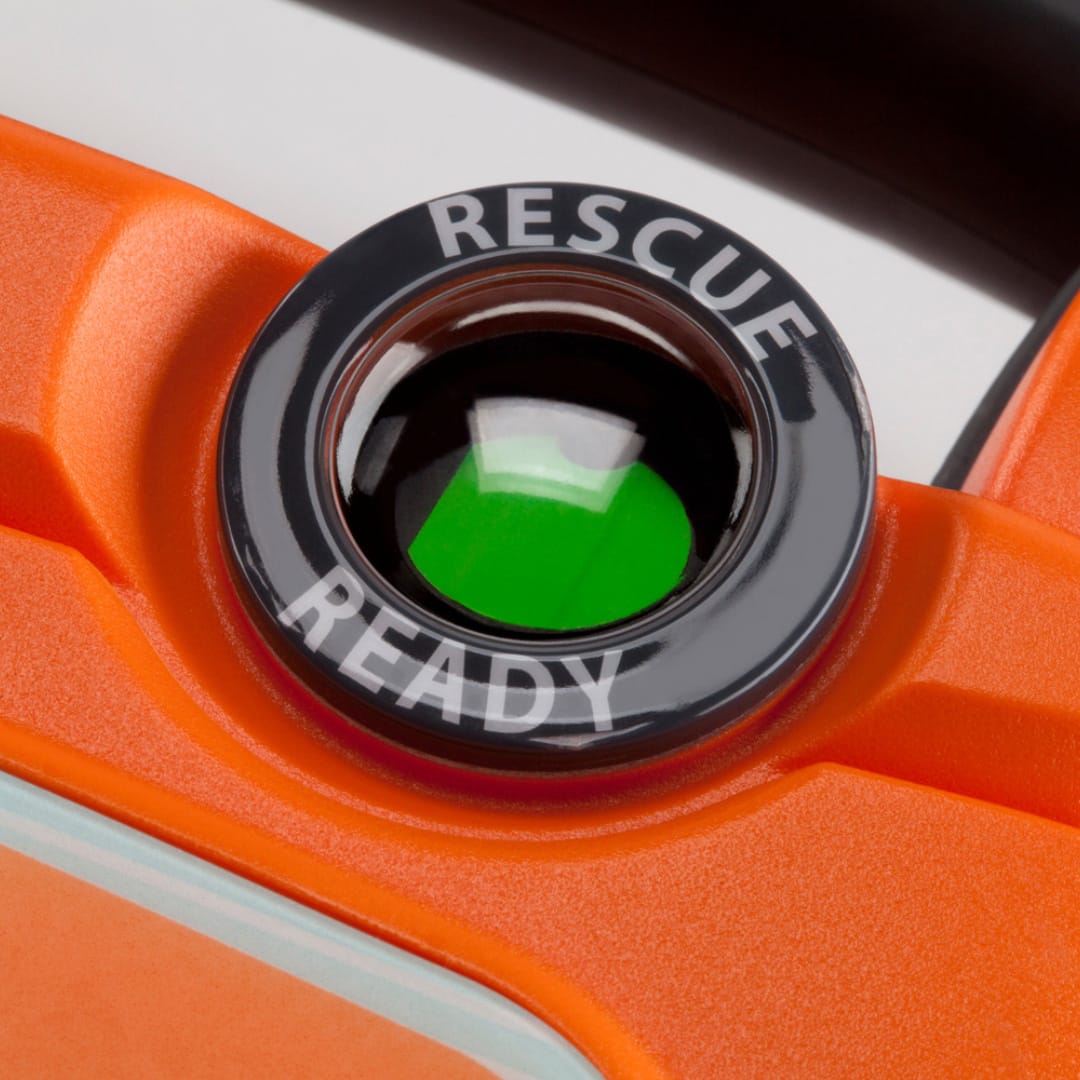
Rescue Ready?
Once you know which defib you have, take a few minutes to check it is actually working.
Some have a power on/off button, while others automatically turn on when you open them up. Most have either a flashing green light, status indicator or battery indicator to show that they are ready for use.
Check the pad and battery expiry dates, and please make sure you don’t confuse the date of manufacture with the date of expiry.
If your defib is showing a warning light, error message or anything else that doesn’t look right, don’t ignore it. Check the manufacturer’s instructions or contact your defib supplier.
Step 3 – Become a Guardian, not just a key holder
So, you’ve found the cabinet, worked out how to get into it and discovered which defib you’ve got. What next?
The secret to being a good Defib Guardian is actually quite simple: check it regularly.
You don’t need to be a medical expert and you don’t need to take the defib apart. A few minutes every month can make a big difference.
Here’s our simple Guardian checklist:
✅ Check the cabinet – Is it secure, clean and undamaged? Is the door working properly?
✅ Check the access – If it’s locked, does the code/key work? Is the code still correct?
✅ Check the defib – Is the status indicator showing that it’s ready for use?
✅ Check the expiry dates – Are the pads and battery still within date?
✅ Check the accessories – If your cabinet contains a bleed kit, first aid kit or other emergency equipment, is everything still present and in date?
✅ Check the signage – Can people easily see what the cabinet is and how to access it?
✅ Check The Circuit – Is the defib still registered and showing the correct location and access information?
And perhaps most importantly…
Make sure somebody else knows you’re the Guardian.
Because being a Defib Guardian isn’t about knowing everything. It’s about knowing what you’ve got, checking that it’s ready and making sure someone can access it when it’s needed.
A few minutes of checking today could make a very big difference on the day someone needs it.
So, welcome to your new role, Defib Guardian. It’s probably not the title you expected when you started your new job or volunteering role, but it could be one of the most important ones.
